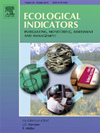
Ecological Indicators
SCISCIE国际简称:ECOL INDIC 参考译名:生态指标
- 基本信息:
- ISSN:1470-160X
- E-ISSN:1872-7034
- 是否OA:开放
- 是否预警:否
- TOP期刊:是
- 出版信息:
- 出版地区:NETHERLANDS
- 出版商:ELSEVIER
- 出版语言:English
- 出版周期:Monthly
- 出版年份:2001
- 研究方向:环境科学-环境科学
- 评价信息:
- 影响因子:8.7
- H-index:97
- CiteScore指数:14.3
- SJR指数:2.099
- SNIP指数:1.71
- 发文数据:
- Gold OA文章占比:99.96%
- 研究类文章占比:96.85%
- 年发文量:1429
- 自引率:0.0869...
- 开源占比:0.8459
- 出版撤稿占比:
- 出版国人文章占比:0
- OA被引用占比:
英文简介Ecological Indicators期刊介绍
The ultimate aim of Ecological Indicators is to integrate the monitoring and assessment of ecological and environmental indicators with management practices. The journal provides a forum for the discussion of the applied scientific development and review of traditional indicator approaches as well as for theoretical, modelling and quantitative applications such as index development. Research into the following areas will be published.
• All aspects of ecological and environmental indicators and indices.
• New indicators, and new approaches and methods for indicator development, testing and use.
• Development and modelling of indices, e.g. application of indicator suites across multiple scales and resources.
• Analysis and research of resource, system- and scale-specific indicators.
• Methods for integration of social and other valuation metrics for the production of scientifically rigorous and politically-relevant assessments using indicator-based monitoring and assessment programs.
• How research indicators can be transformed into direct application for management purposes.
• Broader assessment objectives and methods, e.g. biodiversity, biological integrity, and sustainability, through the use of indicators.
• Resource-specific indicators such as landscape, agroecosystems, forests, wetlands, etc.
期刊简介Ecological Indicators期刊介绍
《Ecological Indicators》自2001出版以来,是一本环境科学与生态学优秀杂志。致力于发表原创科学研究结果,并为环境科学与生态学各个领域的原创研究提供一个展示平台,以促进环境科学与生态学领域的的进步。该刊鼓励先进的、清晰的阐述,从广泛的视角提供当前感兴趣的研究主题的新见解,或审查多年来某个重要领域的所有重要发展。该期刊特色在于及时报道环境科学与生态学领域的最新进展和新发现新突破等。该刊近一年未被列入预警期刊名单,目前已被权威数据库SCI、SCIE收录,得到了广泛的认可。
该期刊投稿重要关注点:
Cite Score数据(2026年6月最新版)Ecological Indicators Cite Score数据
- CiteScore:14.3
- SJR:2.099
- SNIP:1.71
| 学科类别 | 分区 | 排名 | 百分位 |
| 大类:Agricultural and Biological Sciences 小类:Ecology, Evolution, Behavior and Systematics | Q1 | 12 / 736 |
98% |
| 大类:Agricultural and Biological Sciences 小类:Ecology | Q1 | 15 / 491 |
97% |
| 大类:Agricultural and Biological Sciences 小类:General Decision Sciences | Q1 | 6 / 43 |
87% |
CiteScore 是由Elsevier(爱思唯尔)推出的另一种评价期刊影响力的文献计量指标。反映出一家期刊近期发表论文的年篇均引用次数。CiteScore以Scopus数据库中收集的引文为基础,针对的是前四年发表的论文的引文。CiteScore的意义在于,它可以为学术界提供一种新的、更全面、更客观地评价期刊影响力的方法,而不仅仅是通过影响因子(IF)这一单一指标来评价。
中科院SCI分区Ecological Indicators 中科院分区
| 大类学科 | 分区 | 小类学科 | 分区 |
| 环境科学与生态学 | 1区 | ENVIRONMENTAL SCIENCES 环境科学 | 2区 |
| 大类学科 | 分区 | 小类学科 | 分区 |
| 环境科学与生态学 | 1区 | ENVIRONMENTAL SCIENCES 环境科学 | 2区 |
| 大类学科 | 分区 | 小类学科 | 分区 |
| 环境科学与生态学 | 2区 | ENVIRONMENTAL SCIENCES 环境科学 | 2区 |
| 大类学科 | 分区 | 小类学科 | 分区 |
| 环境科学与生态学 | 2区 | ENVIRONMENTAL SCIENCES 环境科学 | 2区 |
| 大类学科 | 分区 | 小类学科 | 分区 |
| 环境科学与生态学 | 2区 | ENVIRONMENTAL SCIENCES 环境科学 | 2区 |
中科院分区表 是以客观数据为基础,运用科学计量学方法对国际、国内学术期刊依据影响力进行等级划分的期刊评价标准。它为我国科研、教育机构的管理人员、科研工作者提供了一份评价国际学术期刊影响力的参考数据,得到了全国各地高校、科研机构的广泛认可。
中科院分区表 将所有期刊按照一定指标划分为1区、2区、3区、4区四个层次,类似于“优、良、及格”等。最开始,这个分区只是为了方便图书管理及图书情报领域的研究和期刊评估。之后中科院分区逐步发展成为了一种评价学术期刊质量的重要工具。
JCR分区Ecological Indicators JCR分区
| 按JCI指标学科分区 | 收录子集 | 分区 | 排名 | 百分位 |
| 学科:ENVIRONMENTAL SCIENCES | SCIE | Q1 | 44 / 395 |
89 |
| 学科:ENVIRONMENTAL SCIENCES | SCIE | Q1 | 21 / 395 |
94.81 |
| 按JCI指标学科分区 | 收录子集 | 分区 | 排名 | 百分位 |
| 学科:ENVIRONMENTAL SCIENCES | SCIE | Q1 | 46 / 376 |
87.9 |
| 学科:ENVIRONMENTAL SCIENCES | SCIE | Q1 | 25 / 376 |
93.48 |
| 按JCI指标学科分区 | 收录子集 | 分区 | 排名 | 百分位 |
| 学科:ENVIRONMENTAL SCIENCES | SCIE | Q1 | 42 / 358 |
88.4 |
| 学科:ENVIRONMENTAL SCIENCES | SCIE | Q1 | 25 / 359 |
93.18 |
JCR分区的优势在于它可以帮助读者对学术文献质量进行评估。不同学科的文章引用量可能存在较大的差异,此时单独依靠影响因子(IF)评价期刊的质量可能是存在一定问题的。因此,JCR将期刊按照学科门类和影响因子分为不同的分区,这样读者可以根据自己的研究领域和需求选择合适的期刊。
发文数据
- 国家/地区数量
- CHINA MAINLAND1019
- USA416
- Italy224
- GERMANY (FED REP GER)198
- Spain187
- Brazil183
- France182
- Australia147
- England144
- Canada139
本刊中国学者近年发表论文
-
1、Functional redundancy buffers aquatic ecosystem stability under environmental stress: insights from multi-trophic and multidimensional biodiversity in a Disturbed River basi
Author: Zhang, Baohang; Zhang, Min; Peng, Wenqi; Qu, Xiaodong; Ge, Jinjin; Zhang, Haiping; Zhang, Yuhang; Du, Longfei; Song, Zhibin; Wu, Naicheng
Journal: ECOLOGICAL INDICATORS. 2026; Vol. 186, Issue , pp. -. DOI: 10.1016/j.ecolind.2026.114815
-
2、The median survival time of motifs: A novel motif-based indicator reveals the impact of algal blooms on bacterial network interaction stabilit
Author: Wang, Chaonan; Xue, Xingyan; Li, Cunlu; Long, Shengxing; Xu, Fuliu
Journal: ECOLOGICAL INDICATORS. 2026; Vol. 186, Issue , pp. -. DOI: 10.1016/j.ecolind.2026.114834
-
3、Quantifying riparian contributions to reservoir sediment carbon mediated by carbon density and inundation dynamic
Author: Ma, Honghai; Li, Zhe; Huang, Wei; Lu, Lunhui; Zhang, Yuanyuan; Cao, Yunpeng
Journal: ECOLOGICAL INDICATORS. 2026; Vol. 186, Issue , pp. -. DOI: 10.1016/j.ecolind.2026.114824
-
4、A unified ecological flow indicator reveals long-term regime shifts and connectivity changes in a regulated river-lake syste
Author: Luo, Wenguang; Zhao, Jinxiao; Han, Yancheng; Yan, Liming; Xia, Jun
Journal: ECOLOGICAL INDICATORS. 2026; Vol. 186, Issue , pp. -. DOI: 10.1016/j.ecolind.2026.114839
-
5、Disentangling the contributions of hydrothermal factors to fractional vegetation cover dynamics on the Qinghai-Tibet platea
Author: Jiang, Chuan; Pu, Yang; Zhang, Shuping; Lei, Yanbin
Journal: ECOLOGICAL INDICATORS. 2026; Vol. 186, Issue , pp. -. DOI: 10.1016/j.ecolind.2026.114816
-
6、Quantifying the effects of urban agglomeration on cropland ecological efficiency in the Sichuan-Chongqing region, Chin
Author: Hou, Wenyue; Yang, Xin; Liang, Tao; Liu, Xincong; Zheng, Xiangyu; Huang, Lang; Chen, Yaran; Pan, Hengyu
Journal: ECOLOGICAL INDICATORS. 2026; Vol. 186, Issue , pp. -. DOI: 10.1016/j.ecolind.2026.114826
-
7、Key drivers and nonlinear controls of Moso bamboo aboveground biomass revealed by machine learning model
Author: Zhou, Xiao; Sharma, Ram P.; Guan, Fengying
Journal: ECOLOGICAL INDICATORS. 2026; Vol. 186, Issue , pp. -. DOI: 10.1016/j.ecolind.2026.114827
-
8、Carbon storage differences among forest growth pathways: An urban-rural gradient analysis in the urban agglomeration in the middle reaches of the Yangtze Rive
Author: Yu, Xu; Fangchun, Wang; Liting, Xu; Hualin, Xie
Journal: ECOLOGICAL INDICATORS. 2026; Vol. 186, Issue , pp. -. DOI: 10.1016/j.ecolind.2026.114828
投稿常见问题
-
请问这本期刊属于什么级别呢?可用于职称评定吗?
一般刊物只分省级、部级、核心,期刊本身是没有几类划分的,具体是几类或者几级,您可以对照单位的分类文件确认一下。Ecological Indicators杂志是由ELSEVIER出版的一本SCI、SCIE,可用于职称评定。
-
你们能够提供哪些核心期刊的咨询服务?
大多数核心期刊我们都是可以提供咨询服务的。目前核心期刊主要分为以下几类:1.国内核心:按照权威度排序,社科类:南大核心>南大扩展>北大核心>科技核心 按照权威度排序。工科类:CSCD C库>CSCD E库(相当于CSCD扩展)>北大核心>科技核心。2.国外核心(全英文):按照权威度排序为:SSCI=SCI>EI>ISTP=CPCI。
-
想快速发表,可以加急吗?
为了确保您的职称评定顺利进行,我们建议提前半年到一年开始准备,这样能够保证有充足的时间来处理所有相关事宜。如果客户需要加急服务,我们会与杂志社进行沟通,以确定是否可以提供加急服务。请注意,如果确认可以加急,可能会收取一定的加急费用。
-
你们提供的服务可以确保稿件被发表吗?
期刊编辑会综合考虑多个因素,如发表范围、学术价值和原创性等,对稿件进行综合评估。尽管任何机构均无法保证每篇稿件都会被发表,但我们可以用专业知识和丰富经验,协助您理解并遵循期刊的发表要求,从而提高您的稿件被发表的机率。
-
请问期刊发表的费用如何?
期刊发表的费用因期刊不同而异。根据您的需求,我们会为您推荐性价比最高的期刊,并提供专业的期刊供您选择。一般来说,只要符合职称要求,大多数作者都会选择性价比最高的期刊作为意向期刊进行重点咨询。我们会为您提供详细的期刊信息和费用说明,以确保您能够做出明智的选择。
-
如果稿件被拒,未能成功发表,费用是否可以退还?
一般来说,我们推荐的期刊和您的专业方向、文章情况都是匹配的,极少出现稿件被拒的情况。如果稿件被拒,期刊编辑会提供详细的拒稿信和建议,以帮助您了解拒稿原因并改进您的稿件。关于退款政策,具体情况可能因期刊不同而异,请您咨询我们的工作人员以获取详细信息。
相关期刊推荐
-

Zbornik Radova Ekonomskog Fakulteta U Rijeci-proceedings Of Rijeka Faculty Of Ec
中科院 4区 JCR Q4
大类:经济学
-
Ec Tax Review
中科院 4区 JCR Q2
大类:经济学
-
Acm Transactions On Economics And Computation
中科院 4区 JCR Q4
大类:计算机科学
-
Engineering Computations
中科院 3区 JCR Q2
大类:工程技术
-

Iet Image Processing
中科院 4区 JCR Q3
大类:计算机科学
-
Anti-corrosion Methods And Materials
中科院 3区 JCR Q2
大类:化学
热门期刊推荐
-
Environmental Science And Pollution Research
中科院 3区 JCR
-
Journal Of Cleaner Production
中科院 1区 JCR Q1
-
Journal Of Environmental Informatics
中科院 2区 JCR Q1
-
Environmental Science & Technology
中科院 1区 JCR Q1
-
Sustainability
中科院 3区 JCR Q2
-
Resources Conservation And Recycling
中科院 1区 JCR Q1
-
Journal Of Hazardous Materials
中科院 1区 JCR Q1
-
Journal Of Environmental Management
中科院 2区 JCR Q1